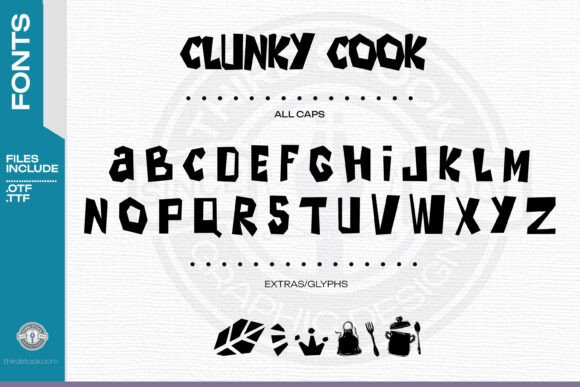
Clunky Cook: The Playful Display Font for Bold Food & Craft Branding
Clunky Cook is a delightful, chunky block-style font, cleverly infused with a sprinkling of culinary-inspired dingbats. This playful typographic creation offers a burst of creativity where business owners can inject personality into their brand identity without sacrificing readability. As an entrepreneur who has spent years refining my shop’s visual language, I know that choosing the right Display typeface is one of the most impactful decisions you will make for your small business. It sets the tone before a customer even reads your tagline.
When you are selling handmade goods, running a cozy café, or launching a boutique online store, your typography needs to do heavy lifting. It must communicate warmth, approachability, and professionalism all at once. Clunky Cook delivers exactly that by combining sturdy, legible letterforms with charming decorative elements. In this guide, I will share how I have integrated this unique font into my daily operations, from packaging design to social media graphics, helping me build a brand that feels both trustworthy and distinctly memorable.
Why Clunky Cook Elevates Small Business Packaging Design
In the world of e-commerce and physical retail, your packaging is often the first tangible interaction a customer has with your brand. Using Clunky Cook on product labels, stickers, and boxes immediately signals that your business cares about detail and fun. Unlike generic script fonts that can look messy when printed at small sizes, the block-style nature of this font ensures that your product name remains clear and legible. I recently redesigned the labels for my line of artisanal soaps, swapping out a thin serif font for Clunky Cook. The result was instant shelf presence; the chunky letters popped against the matte background, and the included culinary-inspired dingbats added a subtle texture that hinted at natural ingredients without cluttering the design.
This font works exceptionally well for businesses in the food, beverage, and craft sectors. Whether you are labeling jars of homemade jam, designing menus for a coffee shop, or creating tags for knitwear, the visual weight of Clunky Cook anchors your design. It conveys stability and reliability—key traits customers look for when they spend money on small businesses. By using this as your primary display font for packaging, you create a cohesive unboxing experience that encourages customers to share photos on social media, effectively turning your packaging into free marketing.
Clunky Cook for Social Media Graphics and Digital Ads
Social media is a visual-first platform, and your thumbnails need to stop the scroll. When creating Instagram posts, Pinterest pins, or Facebook ads, text overlay is crucial for conveying your message quickly. Clunky Cook excels in this environment because its bold, blocky structure stands out against busy photographic backgrounds. I use this font for all my headline graphics, ensuring that key offers like “New Arrival” or “Limited Edition” are impossible to miss. The playful dingbats allow me to break up text blocks visually, adding interest without needing complex graphic design skills.
For digital ads, clarity is king. A decorative font that is too intricate can become illegible on mobile screens, leading to wasted ad spend. Because Clunky Cook maintains high readability even at smaller sizes, it is perfect for call-to-action buttons and promotional banners. I pair the bold headers with a clean sans-serif font for body text, creating a hierarchy that guides the viewer’s eye naturally. This combination of modern typography and playful accents helps my campaigns feel professional yet approachable, increasing engagement rates compared to my previous, more generic font choices.
Building a Consistent Brand Identity with Creative Fonts
Consistency is what separates hobbyists from established brands. When your logo, website, email signatures, and marketing materials all speak the same visual language, you build trust. Integrating Clunky Cook into your brand guidelines helps achieve this uniformity. I recommend using it as your primary logo font if your business operates in a creative or lifestyle niche. Its unique character set allows for custom logo designs that are difficult to replicate, giving your brand a distinct edge in a crowded market.
However, consistency also means knowing when not to overuse a decorative typeface. While Clunky Cook is fantastic for headlines and short phrases, it should be used sparingly for long-form content. I treat it as a premium accent font rather than a body text solution. By reserving it for impact moments—such as sale announcements, new product launches, and seasonal greetings—I ensure that every time it appears, it feels special and intentional. This strategic usage prevents visual fatigue and keeps your brand identity fresh and exciting for your audience.
Font Pairing Strategies for Professional Results
One of the biggest challenges for small business owners is achieving balance in their design. A font as expressive as Clunky Cook needs a partner that can ground it. My go-to strategy is pairing this display font with a simple, geometric sans-serif font for secondary information. The contrast between the chunky, playful headers and the clean, minimal body text creates a sophisticated look that appeals to a broad audience. For example, on my business cards, I use Clunky Cook for my name and title, while my contact details and website URL are set in a neutral sans-serif. This ensures that while the card looks fun and inviting, the essential information is easy to read and process.
Another effective pairing involves using a classic serif font for quotes or testimonials. The elegance of a serif complements the rustic charm of the culinary-inspired dingbats in Clunky Cook, creating a harmonious blend of old-world craftsmanship and modern playfulness. This technique is particularly useful for websites and brochures where you want to highlight customer feedback or brand stories. Experimenting with these combinations allows you to tailor the mood of your brand, whether you want to lean more towards professional service or whimsical creativity.
Practical Tips for Testing and Licensing Your Typeface
Before committing to a new typeface across your entire brand, always test it in real-world scenarios. Print out proofs of your labels, mock up social media posts, and view them on different devices. Check how Clunky Cook renders at various sizes and colors. Does the culinary-inspired dingbat still look clear when reduced to a thumbnail size? Is the contrast sufficient for accessibility? These practical tests save time and money by preventing costly redesigns later. I always create a small brand kit with my chosen fonts to see how they interact together before finalizing any major design changes.
Finally, remember to check the commercial licensing terms for any font you use. While Clunky Cook offers immense value for branding, marketing, and packaging, you must ensure you have the appropriate rights to use it on products sold to third parties, such as merchandise, templates, or client work. Understanding the difference between personal and commercial licenses protects your business from legal issues and ensures you can scale your operations confidently. Investing in the right Fonts with proper permissions is a small cost that pays off in peace of mind and professional integrity.