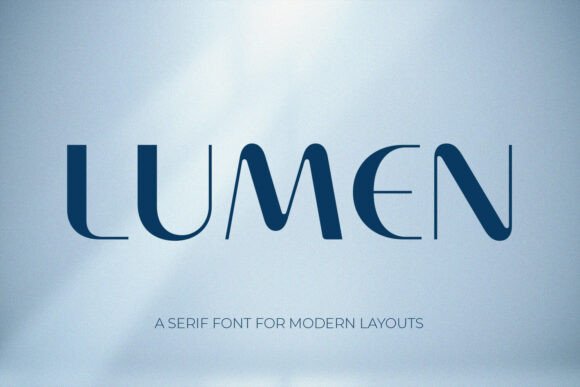
Lumen Typeface Review: High-Contrast Serif for Brand Identity
I opened a blank document on my screen, the cursor blinking against a white void, ready to sketch out a brand identity for a new artisanal skincare line. The brief called for something that felt luxurious but approachable—elegant without being pretentious. I pulled up my usual go-to serif fonts, scrolled past the safe choices, and landed on Lumen. It wasn’t just another decorative typeface; it was a high-contrast serif display font characterized by its sharp terminals and varied stroke thickness. As I typed out the client’s name, the letters immediately commanded attention. The design focuses on structural balance and distinct letterforms, making it highly readable even at larger sizes, which is exactly what I needed to anchor the visual hierarchy of the brand board.
This review isn’t about theoretical typography; it’s about how Lumen performed when I actually pushed it through the wringer of a real-world branding project. From logo drafts to packaging mockups, here is an honest look at why this font deserves a spot in your creative toolkit.
Lumen for Skincare Packaging and Product Labels
When you are designing for the beauty or wellness industry, the texture of the type matters almost as much as the word itself. Lumen brings a sophisticated weight to any Display application where elegance is non-negotiable. In my project, I placed the font on a matte black box mockup with gold foil accents. The sharp terminals of the characters caught the eye instantly, creating a sense of precision and care that aligned perfectly with the product’s promise of purity.
The varied stroke thickness in Lumen creates a natural rhythm that guides the viewer’s eye down the label. Unlike flatter serifs that can get lost on small packaging, Lumen’s contrast ensures legibility without sacrificing style. For handmade sellers and online shop owners looking to elevate their product presentation, using Lumen for the primary brand name on jars, bottles, or bags adds an immediate layer of perceived value. It signals quality before the customer even reads the ingredient list.
Why Structural Balance Matters in Logo Design
A logo needs to work at 20 pixels and 20 feet. One of the most impressive aspects of testing Lumen in a logo design context was its structural integrity. Because the design focuses on structural balance and distinct letterforms, the font maintains its character even when scaled down. I experimented with a monogram concept using the initials of the fictional skincare brand, and the sharp angles provided a modern, geometric feel that balanced the organic curves of the surrounding graphics.
However, designers should note that Lumen is best used as a headline font or accent font rather than a body text solution. Its high-contrast nature is designed for impact, not endurance. When used correctly in a logo system, it establishes a strong visual anchor that other, simpler typefaces can support. This makes it an excellent choice for creative studios and freelancers who need a versatile asset that can serve as both a logo mark and a key branding element.
Lumen in Editorial Design and Social Media Graphics
Beyond physical products, I tested Lumen in digital spaces, specifically for social media graphics and editorial layouts. The font’s personality shines in short phrases and pull quotes. On an Instagram post template, Lumen provided the perfect counterpoint to clean, minimal photography. The sharp terminals cut through the visual noise, ensuring that the message stood out in a crowded feed.
For bloggers, publishers, and content creators, Lumen offers a way to inject personality into digital content without resorting to overly playful or childish scripts. It feels authoritative yet artistic. I paired it with a clean sans serif font for body copy, and the contrast between the two created a dynamic, modern typography system. This combination works particularly well for websites that want to convey expertise and sophistication, such as luxury travel blogs, high-end fashion magazines, or boutique agency portfolios.
Font Pairing Strategies for Modern Typography
One of the biggest challenges with high-contrast serifs is finding a companion that doesn’t compete for attention. Lumen pairs beautifully with geometric sans serif fonts, which complement its sharp lines without mimicking them. In my project, I used a lightweight grotesque sans serif for secondary information like pricing and descriptions. This pairing allowed Lumen to remain the star while ensuring the overall design remained accessible and easy to navigate.
If you are building a brand identity from scratch, consider how Lumen interacts with other elements. Its distinct letterforms make it a powerful tool for creating visual hierarchy. Use it for headlines, subheads, and key messaging, and let simpler fonts handle the heavy lifting of communication. This strategic use of Display Fonts ensures that your design assets remain cohesive and professional across all platforms.
Practical Considerations for Commercial Use
Before integrating Lumen into your final client work, it is essential to understand its limitations. While it is highly readable for short texts, it may not be suitable for long-form body copy. The high contrast can cause eye fatigue if readers have to process large blocks of text set in this style. Additionally, because of its sharp terminals, extremely small sizes (under 8pt) might lose some of their definition, so always test your designs at their intended output size.
Another critical step is reviewing the included styles, alternates, ligatures, and weights. A premium font like Lumen often comes with a suite of tools that enhance its versatility. Check for swashes or special characters that can add flair to specific words or names. Also, verify the multilingual support if your brand operates in multiple regions. Ensuring you have the right file formats, including webfont availability, will streamline your workflow whether you are working on print-on-demand products or digital campaigns.
Final Thoughts on Licensing and Workflow
Always check commercial font licensing before using Lumen in client work, brand identity, packaging, templates, merchandise, websites, digital products, or print-on-demand products. Understanding the license terms protects you and your clients from legal issues and ensures you are supporting the type designer fairly. For many graphic designers and entrepreneurs, investing in a high-quality font like Lumen is a smart move. It saves time on custom lettering, provides a polished look out of the box, and helps create a memorable brand perception.
In conclusion, Lumen is more than just a pretty face; it is a functional, stylish, and robust tool for modern designers. Whether you are refreshing a local restaurant logo system or launching a new creative studio identity, this font delivers on its promise of elegance and clarity. If you are looking to add a touch of refined sophistication to your next project, Lumen is definitely worth exploring.