Preton Typeface Review: High-Energy Display Fonts for Bold Branding
I remember staring at a blank InDesign document, the cursor blinking on an empty artboard. The client was a local energy drink startup that wanted to break away from the typical aggressive sports aesthetics. They didn’t want "loud"; they wanted "charged." I opened my font library and landed on Preton. It wasn’t just another geometric sans; it had this specific electrical tension in its letterforms. That moment of clicking "type" and seeing the sharp, lightning-inspired cuts immediately shift the mood of the entire layout is why I’m reviewing this typeface now. If you are looking for Fonts that can inject immediate dynamism into your projects, Preton deserves a serious look.
Preton for Energy Drink and Tech Startup Logos
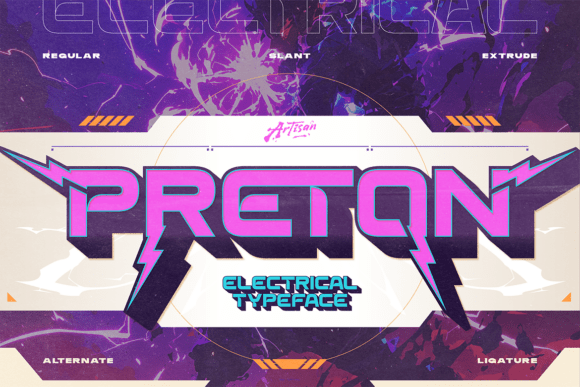
When we talk about Display fonts that carry weight, Preton stands out because of its futuristic structure. During my initial logo concept phase, I placed the wordmark over a dark background with neon accents. The font’s inherent angularity mimics the visual language of electricity without being cliché. Unlike standard block letters, Preton has these subtle, razor-sharp terminals that suggest motion even when static. For a brand identity centered around speed, power, or innovation, this typeface does the heavy lifting for you. You don’t need to add excessive graphic elements to make it pop; the typography itself carries the narrative. This makes it an exceptional choice for tech startups, gaming brands, or any business that needs to communicate high voltage through their visual identity.
Preton in Packaging Design for Premium Products
Moving beyond the screen, I tested Preton on a physical packaging mockup for a skincare line that focused on "active ingredients" and clinical efficacy. The contrast between the organic product imagery and the rigid, electric lines of the font created a striking visual hierarchy. Because Preton is a bold electrical display font built to bring high energy into your designs, it commands attention on shelves. However, there is a nuance here: it works best as a headline or accent font on packaging. When used for the primary product name, it establishes authority and modernity. I found that pairing it with a clean, minimal sans serif for the ingredient list kept the design grounded. The font’s sharp cuts prevent the package from feeling flat, adding a layer of premium sophistication that generic fonts often lack.
Preton for Social Media Graphics and Digital Ads
In the fast-scrolling world of social media, you have milliseconds to capture attention. I applied Preton to a series of Instagram story templates and banner ads. The results were immediate. The font’s dynamic lo (lineage/look) ensures that text remains legible even at smaller sizes on mobile devices, provided it isn’t overcrowded. Its futuristic structure translates well to digital screens, where pixel-perfect rendering highlights its crisp edges. For marketers and content creators, using Preton in social media graphics signals that the brand is forward-thinking and energetic. It breaks the monotony of standard Helvetica or Arial headlines. Whether you are promoting a flash sale, a new app launch, or a creative workshop, this typeface adds a layer of professional polish that elevates the perceived value of your digital assets.
Preton Web Design Headers and Editorial Layouts
Web designers often struggle to find a display font that bridges the gap between artistic flair and web performance. Preton fits neatly into modern typography systems. I used it for the hero section of a portfolio site, setting it against a full-width image. The impact was substantial. It anchors the page and guides the user’s eye directly to the core message. In editorial design, such as magazine covers or blog headers, Preton serves as a powerful tool for emphasis. It is not a body text font—its sharp features would cause fatigue during long reads—but as a headline font, it is unmatched in delivering a punchy, memorable impression. When paired with a neutral serif font for article text, it creates a balanced composition that feels both contemporary and authoritative.
Font Pairing and Practical Application Tips
To get the most out of Preton, understanding its limitations is just as important as knowing its strengths. Because it is a bold electrical display font, it demands space. Do not crowd it with other decorative elements. For pairing, I recommend sticking to simple, unobtrusive typefaces. A lightweight sans serif font works beautifully to balance the visual weight of Preton. Avoid pairing it with other display fonts or overly ornate scripts, as the competition for attention will clutter the design. Handwritten fonts might clash with its futuristic structure unless used very sparingly for a contrasting "human touch."
Before committing to Preton for final client work, always test it in context. Print it out at actual size to check how the sharp cuts hold up in ink. On screen, ensure the kerning looks consistent across different browsers. Also, review the included styles, alternates, and ligatures if available; these small details can elevate a good design to a great one. Finally, remember to check the commercial font licensing terms. Using a premium font like Preton in client branding, merchandise, or websites requires the appropriate license to avoid legal issues. Investing in the right typeface is an investment in your brand’s credibility, and Preton delivers a high-energy aesthetic that resonates with modern audiences.