Quick Book Writing: The Handwritten Font for Editorial Design
I was sitting at my desk last Tuesday, staring at a blank Canva canvas, trying to redesign the header for my weekly lifestyle newsletter. The problem wasn’t the content; it was the visual rhythm. I had been using the same clean, geometric sans-serif for everything—titles, subtitles, pull quotes—and while it was readable, it felt sterile. It lacked the warmth of a handwritten note or the personal touch that makes readers feel like they are part of an intimate conversation. That is when I remembered Quick Book Writing. I had downloaded it months ago as a curiosity, but never truly tested it in a real-world layout. This time, I decided to put it to work.
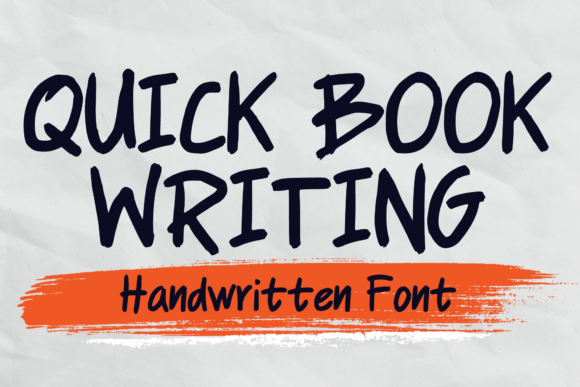
Introducing Quick Book Writing, your go-to handwriting font conceived to add an enchanting yet swift touch to your creatives. This effortlessly playful font is incredibly versatile and adapts seamless into various design contexts, provided you understand its character. As an editorial designer, I know that not all handwritten fonts are created equal. Some are too chaotic for body text, while others are too stiff for emotional appeal. My goal was to find a typeface that could bridge the gap between professional polish and human imperfection.
Quick Book Writing for Blog Headers and Brand Identity
When I first applied Quick Book Writing to my blog’s main title, the change was immediate. Because this is a Display font, it commands attention without shouting. The letters have a slight slant and a natural flow that mimics quick, confident pen strokes. For a blogger or publisher, this means your brand identity instantly feels more approachable. In the crowded space of digital publishing, standing out often means breaking away from rigid grids. Using this font for your masthead or logo allows you to inject personality directly into your URL and social media profiles.
The key here is restraint. I used Quick Book Writing only for the primary headline of the newsletter graphic, leaving the subheadings in a neutral serif. This contrast created a clear visual hierarchy. The eye is drawn to the handwritten style because it breaks the pattern of standard typography. It signals to the reader that the content inside is curated with care, perhaps even written by hand before being digitized. This subtle cue builds trust and engagement, which is exactly what independent content brands need to retain their audience.
Quick Book Writing for Recipe Ebook Covers and Printables
A few days later, I started working on a small digital product: a printable meal planner and recipe guide. I needed a font that looked good on screen but also held up well when printed on A4 paper. Many script fonts suffer from poor legibility when scaled down, but Quick Book Writing maintains its clarity. Its open counters and distinct letterforms ensure that words like "Breakfast," "Lunch," and "Dinner" remain easy to read even in smaller sizes.
I used the font for the cover title and section dividers. The "enchanting yet swift touch" mentioned in its description really shines here. It doesn’t look like a formal calligraphy script, which can sometimes feel too expensive or distant for a home cookbook. Instead, it feels like a friend’s recommendation scribbled in a margin. For creators selling printables on platforms like Etsy or Gumroad, this aesthetic is powerful. It suggests utility mixed with charm. When designing these assets, I made sure to check the included styles and alternates. Having access to different weights or swashes allowed me to create emphasis without changing the entire typeface family, keeping the design cohesive.
Quick Book Writing for Newsletter Graphics and Social Media
Digital marketing requires constant adaptation. Whether you are designing a square Instagram post or a wide email banner, your typography needs to be responsive. Quick Book Writing proved to be remarkably adaptable across these formats. I tested it in a series of motivational quote graphics for my coaching clients. The font’s playful nature softens the message, making advice feel less like a command and more like a suggestion.
However, readability considerations for screen reading are crucial. While it is a fantastic accent font, I would not recommend using it for long-form content or dense paragraphs. The irregularities that give it character can become fatiguing if the reader has to process thousands of characters. Instead, use it for pull quotes, chapter openers, or short headlines within your newsletter. Pair it with a highly readable sans serif font for the body copy. This combination leverages the best of both worlds: the emotional hook of the display font and the functional efficiency of a standard web font. This strategy ensures that your audience stays engaged without straining their eyes.
Quick Book Writing for Wedding Guides and Course Materials
One of the most surprising applications I found was in a wedding planning workbook I was assembling for a client. Weddings are all about personalization, and generic templates often fail to capture that essence. By integrating Quick Book Writing into the table of contents and decorative borders, the document transformed from a dry checklist into a keepsake. The font’s versatility allows it to fit into themes ranging from rustic barn weddings to modern minimalist ceremonies.
For course creators and educators, this font can humanize your materials. Online courses often feel detached, but adding handwritten elements to slide titles or worksheet headers can make the learning experience feel more supportive. It adds a layer of "human touch" that is missing from many automated digital products. When selecting Fonts for such projects, always consider the mood you want to evoke. If you want authority, stick to serifs. If you want connection, try a display font like this one. Just remember to verify the commercial font licensing before distributing paid materials. Most premium fonts allow for commercial use in digital downloads, but checking the specific EULA (End User License Agreement) is a necessary step for any professional designer.
Quick Book Writing for Magazine Layouts and Editorial Features
In traditional editorial design, consistency is king. However, monotony is the enemy of interest. I recently experimented with using Quick Book Writing for drop caps and sidebars in a feature article layout. The result was striking. The font acted as a visual anchor, guiding the reader through the text without distracting from the narrative. It works particularly well for magazine covers where space is limited and impact is required. The swift, energetic strokes of the letters convey movement and excitement, perfect for lifestyle or fashion publications.
When pairing this font, I recommend looking for a serif font with similar x-height proportions for the body text. This creates a harmonious relationship between the display element and the reading material. Avoid pairing it with overly decorative scripts, as the competition for attention will clutter the design. Clean, understated companions allow Quick Book Writing to shine. Also, consider the file formats available. Ensuring you have high-resolution exports or vector files guarantees that your typography remains crisp whether viewed on a 4K monitor or printed on glossy magazine paper.
Why Quick Book Writing Fits Modern Content Creation
The market for digital content is saturated, but the demand for authentic, human-centric design is higher than ever. Readers are tired of corporate speak and robotic aesthetics. They crave connection. Quick Book Writing delivers that connection through its thoughtful design. It is not just a collection of glyphs; it is a tool for storytelling. Whether you are building a brand identity for a new startup, designing a wedding invitation suite, or simply sprucing up your blog, this font offers a reliable solution.
Its ability to adapt seamlessly means you don’t need to reinvent the wheel for every project. You can rely on it to provide a consistent tone across multiple platforms. From ebook covers to social media graphics, it maintains its integrity. For designers who value efficiency without sacrificing quality, Quick Book Writing is an essential addition to your library. It respects the reader’s time by being visually clear, while respecting the creator’s vision by offering ample stylistic flexibility. In a world of endless scrolling, giving your content a distinctive, handwritten voice might just be the difference between a glance and a click.