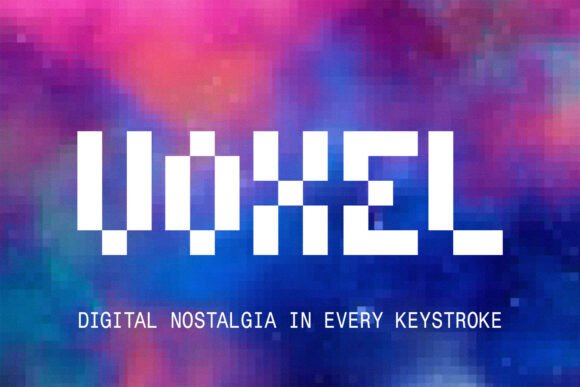
Voxel Typeface: Bold 8-Bit Pixel Font for Retro Branding
I opened a blank Figma file at 2 AM, staring at a client brief that asked for a "vintage yet modern" identity for a new artisanal coffee roaster. The challenge was immediate: how do you balance warmth with a distinct, digital-native edge? That’s when I pulled Voxel into the project. Introducing Voxel, a bold and nostalgic 8-bit pixel font inspired by classic arcade games and vintage digital screens, felt like finding the missing piece of a puzzle I hadn’t realized was incomplete. As a graphic designer, I am always hunting for typefaces that carry personality without sacrificing legibility, and this display font delivered exactly what the brand needed.
Voxel for Coffee Shop Logos and Packaging Design
When testing Voxel for packaging design, the first thing I noticed was its structural integrity. Display fonts often struggle to hold up on small labels, but the geometric precision of these Fonts works surprisingly well even at smaller scales. For the coffee roaster, we used Voxel for the primary logo lockup. The chunky, blocky nature of the letters gave the brand an instant sense of playfulness and authenticity, reminiscent of early computer interfaces or retro gaming cabinets. It wasn’t just a font; it was a visual statement about craftsmanship meeting technology. We paired it with a clean sans serif font for the descriptive text, creating a hierarchy that guided the eye from the bold brand name down to the product details. The result was a package that stood out on crowded shelves, leveraging nostalgia to create an emotional connection with customers who appreciate both coffee culture and retro aesthetics.
Voxel in Social Media Graphics and Digital Headers
The versatility of Voxel extends far beyond print. In today’s digital-first landscape, social media graphics require type that grabs attention within milliseconds. I applied Voxel to a series of Instagram posts promoting the roaster’s seasonal blend. Because it is a creative font with high contrast against white backgrounds, it performed exceptionally well as a headline font. The complete character set including uppercase, lowercase, numbers, and symbols meant we could maintain consistency across all assets. Whether it was announcing a limited-time offer or highlighting a new bean origin, Voxel added a layer of visual interest that standard typography lacked. On website headers, it served as an effective accent font, breaking up the monotony of body copy and reinforcing the brand’s quirky, tech-savvy vibe. Its bold presence ensured that key messages were never lost in the noise of the feed.
Voxel for Editorial Design and Print Marketing Materials
While pixel fonts are often associated with screen-based work, Voxel proved to be a robust choice for editorial design and printed marketing materials. During a recent branding project for a local creative studio, we explored using Voxel for their annual report covers and event flyers. The texture of the pixels translated beautifully to high-resolution print, offering a tactile quality that flat vector fonts sometimes miss. When designing the layout, I treated the font as a graphical element rather than just text. By manipulating spacing and alignment, we created dynamic compositions that felt structured yet energetic. This approach worked particularly well for short-form text where impact is prioritized over volume. However, for longer articles or detailed descriptions, I reverted to a traditional serif font to ensure readability. Using Voxel sparingly in print allowed us to leverage its novelty without overwhelming the reader, maintaining a professional tone while injecting personality.
Font Pairing Strategies with Voxel
One of the most critical aspects of working with such a distinctive typeface is knowing how to pair it. Voxel demands balance. If you use it everywhere, the design becomes chaotic and hard to read. My recommendation is to treat Voxel as a display font and let other typefaces handle the heavy lifting of communication. A modern sans serif font pairs seamlessly with Voxel, providing a neutral backdrop that allows the pixelated characters to shine. Alternatively, pairing it with a delicate script font can create a striking contrast between the rigid, digital structure of Voxel and the organic flow of handwritten letterforms. This juxtaposition is powerful in branding, suggesting a fusion of old-school charm and contemporary innovation. When selecting a supporting typeface, look for simplicity and neutrality. Avoid other decorative fonts, as they will compete for attention. The goal is to create a cohesive brand identity where Voxel acts as the star, supported by understated elegance.
Practical Considerations for Commercial Use
Before integrating Voxel into any client project, it is essential to review the technical specifications. Does the font include multilingual support? Are there alternate glyphs or ligatures available to add variety? For commercial design assets, understanding the licensing terms is non-negotiable. Ensure that the font allows for the intended uses, whether that involves merchandise, web embedding, or broadcast. Testing the font in various contexts before committing to a full brand system is also wise. Create mockups for business cards, shop signs, and digital templates to see how the font behaves in different environments. Pay attention to kerning and tracking; pixel fonts can sometimes feel cramped if not spaced correctly. By taking these practical steps, you can avoid common pitfalls and ensure that Voxel enhances your design rather than detracting from it. This proactive approach builds trust with clients and results in more polished, professional outcomes.
Voxel for Merchandise and Product Labels
The appeal of Voxel makes it an excellent candidate for merchandise and product labels, where uniqueness drives sales. I recently saw a brand use Voxel on tote bags and enamel pins, and the response was overwhelmingly positive. The font’s association with gaming and retro culture resonates strongly with younger demographics, making it a smart choice for brands targeting Gen Z or millennials. On product labels, the bold strokes ensure that the brand name is legible from a distance, which is crucial for retail visibility. The nostalgic mood evoked by the 8-bit style adds value to the product itself, turning a simple item into a collectible experience. Whether you are designing stickers for a handmade shop or labels for a boutique skincare line, Voxel offers a way to infuse your products with character. It transforms ordinary packaging into memorable brand touchpoints that customers want to share and keep.
Evaluating Readability and Visual Hierarchy
Readability is the ultimate test for any typeface, especially one as stylized as Voxel. While it excels as a headline font, it is less suitable for long paragraphs of body text. The pixelated edges can cause eye strain if readers have to process too much information at once. Therefore, establishing a clear visual hierarchy is paramount. Use Voxel for titles, subheads, and call-to-action buttons, but rely on highly legible sans serif or serif fonts for detailed content. This strategy ensures that your audience can engage with your message without fatigue. In branding, consistency is key. By defining clear rules for when and how Voxel is used, you maintain professionalism while allowing for creative expression. This disciplined approach helps build recognition, as audiences learn to associate the bold, pixelated style with your brand’s unique voice. Ultimately, good design is about guiding the user’s eye, and Voxel provides a powerful tool to do just that when used with intention.